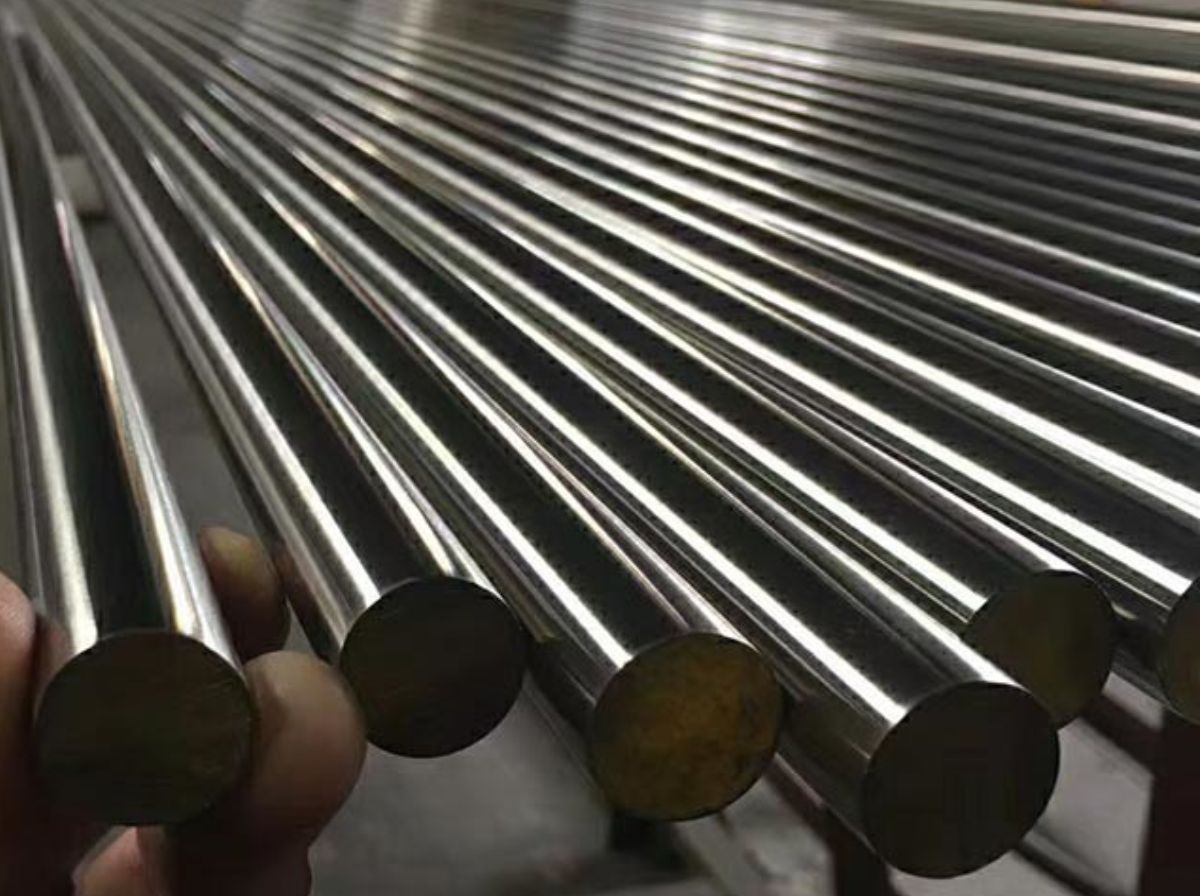
Aerospace components operate under conditions few other industries encounter. Engine bays and exhaust paths reach several hundred degrees Celsius, structural fittings absorb constant vibration, and thermal cycling between takeoff and cruise pushes materials through repeated expansion and contraction. Add mechanical loads and exposure to moisture and hydraulic fluids, and material selection becomes a decision with narrow margins.
Aerospace Grade SS 321 Round Bars meet these demands simultaneously. This titanium-stabilized austenitic stainless steel holds its mechanical properties at elevated temperatures and welds without the carbide precipitation problems that affect unstabilized grades. Titanium bonds preferentially with carbon during heating, keeping chromium available for corrosion resistance.
This blog covers the material’s core properties, its aerospace advantages, its applications on aircraft, and how to select the right bar stock.
What Is Stainless Steel 321 Round Bar?
Grade 321 is an austenitic stainless steel stabilized with titanium, added to bond with carbon before chromium can. Without this stabilization, prolonged exposure between roughly 425°C and 870°C causes chromium to combine with carbon and form carbides along grain boundaries, depleting nearby chromium and leaving the steel open to intergranular corrosion.
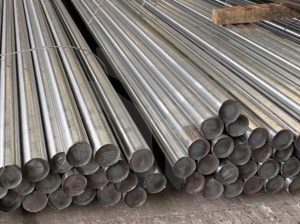
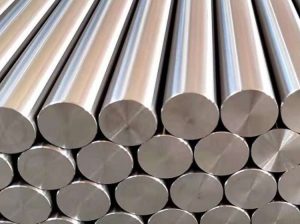
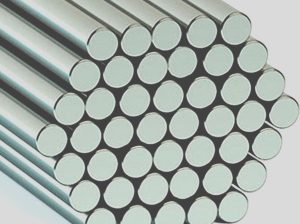
321 Stainless Steel Round Bar stock supplies the starting material for shafts, pins, fasteners, bushings, and other cylindrical components requiring precision machining. The round form minimizes waste compared to plate stock when the final geometry is cylindrical.
Benefits of SS 321 Round Bar in Aerospace Applications
Reliable Performance at Elevated Temperatures: Engine housings and exhaust brackets sit close to heat sources that cycle repeatedly during flight. Grade 321 retains useful mechanical properties through this range, which matters for parts facing intermittent high-temperature exposure.
Resistance to Oxidation: Surfaces exposed to hot air and combustion byproducts need a stable oxide layer that resists scaling, protecting thermal system components from surface degradation over repeated cycles.
Reduced Risk of Intergranular Corrosion After Heating: Titanium Stabilization Limits Chromium Carbide Formation during Welding, which is crucial for welded assemblies.
Good Corrosion Resistance: Chromium and nickel content resists atmospheric exposure and a range of chemical environments met during operation and maintenance. No stainless grade resists every chemical an aircraft might contact, so fluid compatibility needs checking against the application.
Suitable for Machined Components: Round bar machines directly into shafts, pins, bushings, fasteners, spacers, fittings, and precision components without the transitions plate stock requires.
Good Weldability: Aerospace assemblies frequently combine machined and welded elements. Grade 321 keeps its corrosion resistance and mechanical properties after welding, reducing the need for post-weld heat treatment.
Resistance to Thermal Cycling: Repeated heating and cooling stresses a component’s microstructure over its service life. Grade 321’s stability under cyclic thermal loading suits parts that move through this cycle on every flight.
Useful Strength and Toughness Balance: Aerospace hardware needs strength to carry mechanical loads alongside toughness to resist cracking under vibration. Grade 321 provides this balance for selected applications, though the right combination depends on the load case.
Aerospace Applications of SS 321 Round Bars
Engine and Exhaust Components
High-temperature fasteners, shafts, pins, and engine-adjacent hardware benefit from a material that holds up under sustained heat and oxidizing combustion gases.
Aircraft Thermal Systems
Heat-resistant fittings, supports, and machined hardware in thermal management systems use the same oxidation resistance and high-temperature stability.
Aerospace Fabrication
Precision-machined parts, structural hardware where the specification permits Grade 321, and welded assemblies draw on the round bar as raw stock.
High-Temperature Hardware
Components facing elevated temperatures, thermal cycling, and oxidizing atmospheres across engine bays and exhaust paths sit at the center of this grade’s use case.
How to Choose the Right SS 321 Round Bar for Aerospace Use
Determine the operating temperature range of the component including the peak transient conditions. Evaluate the environment for chemical exposure and moisture. Determine the mechanical requirements. Check dimensional requirements against the final part to insure the bar diameter allows enough stock for finishing.
Check the material complies with the relevant standard like ASTM A276 Type 321 Round Bars for the range of properties required for the application. Ensure certification and full material traceability from the mill to the finished part before procurement, as required by aerospace programs.