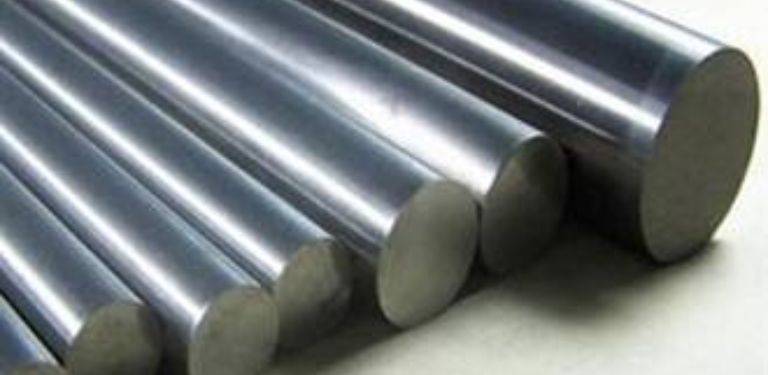
The grade of a stainless steel round bar determines its corrosion resistance, mechanical strength, temperature ceiling, and fabrication behaviour. Selecting the wrong grade produces premature failure, rather than a marginal reduction in performance.
SS round bars are used in building constructions, saltwater systems, high-temperature furnace components, and wear-resistant mechanical assemblies. Each service situation stresses the alloy differently. The same 304 metal that works well in food processing corrodes quickly in naval installations. 316L bars for high-temperature kiln components decrease yield strength at operating temperature. Engineers choose grades. This guide contains main grades, confirmed attributes, and selection reasoning.
What Is a Stainless Steel Round Bar?
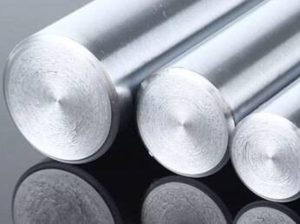
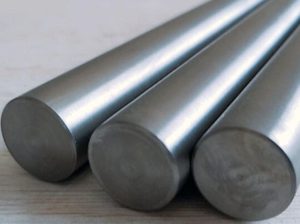
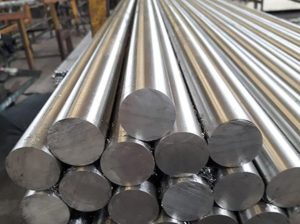
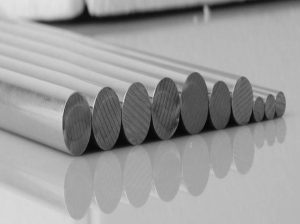
Stainless steel is a corrosion-resistant iron alloy with at least 10.5% chromium that is strong, durable, and attractive. These bars undergo two basic production procedures. Hot rolling creates scaled bars with dimensional tolerances for typical industrial use. Billets are passed through many roll stands to get the desired diameter. Cold drawing increases surface smoothness, tolerances, and work hardening by extruding the bar through a die at room temperature, raising ultimate and yield stresses.
Available finishes include black (hot rolled as produced), bright (cold drawn), peeled (spun to remove surface defects), and polished. The finishes have a bearing on the dimensional accuracy as well as machinability. Stainless steel round bars conform to various specifications like ASTM A276, ASTM A479, ASME SA276, and EN 10088.
Why Grade Selection Matters
Corrosion resistance defines the most obvious distinction, but this is not the only criterion. The pitting resistance equivalent number (PREN) is used to define the ability of the material to resist local corrosion in saltwater. It is based on chromium, molybdenum, and nitrogen content. Seawater service grades with a PREN less than 25 are prone to pitting. A low chromium alloy will experience scaling in a high-temperature oxidising environment. These are not anomalies; they are expected results of mismatched specifications.
An austenitic 316 bar provides a yield strength of roughly 200–250 MPa, whereas a Duplex 2205 bar exceeds 450 MPa. Along with strength and corrosion behaviour, temperature performance, weldability, and fabrication characteristics all vary across grades in ways that directly affect project outcomes and long-term maintenance costs.
Major Stainless Steel Round Bar Grades Explained
Grade 304 / 304L
18/8 (18% chromium, 8% nickel) austenitic stainless steel grade 304 is the most commonly requested general-purpose grade. Fabrication, structural components, and construction applications benefit from its reliability in atmospheric and slightly corrosive conditions. 304L (≤0.03% carbon) reduces weld sensitisation during manufacture.
Grade 316 / 316L
Grade 316 resists saline pitting and crevice corrosion due to 2-3% molybdenum added to 304. It is widely used in ships, coastal locations, and chemical facilities. The 316L variant has less than 0.03% carbon and welds better. It is used in difficult situations because it resists chlorides better than 304.
Grade 310
Grade 310 resists continuous oxidation up to 1100°C because to its 24-26% chromium and 19-22% nickel content. Its high alloy percentage keeps steel strong at high temperatures, unlike 304 and 316. It’s used to make furnace parts, heat treatment fixtures, radiant tubes, etc.
Duplex 2205
Duplex 2205 has a PREN above 35 for saltwater application and corrosion resistance due to its 22% chromium, 5% nickel, and 3% molybdenum structure. It allows lightweight, high-strength designs with a minimum yield strength of 450 MPa, about double that of 304 or 316. It is used in offshore platforms, subsea pipelines, and desalination systems.
H410 / 420 (Martensitic Grades)
Grade 410 offers fair corrosion resistance with high strength and hardness after heat treatment. It finds usage for making parts like shafts, valves, and mechanical parts. Grade 420 contains more carbon for attaining hardness up to 50 HRC for wear-resistant parts.
Grade Comparison Table
The table below summarises verified minimum properties across the main grades:
| Grade | Min Yield Strength | Corrosion Resistance | Temp. Resistance | Weldability | Typical Applications |
| 304 / 304L | 205 MPa (304) | Good -general media | Up to 870°C (intermittent) | Excellent | Fabrication, food, architecture |
| 316 / 316L | 205 MPa (316) | Superior -chlorides | Up to 870°C (intermittent) | Excellent | Marine, chemical, pharma |
| 310 | 205 MPa | Good in oxidising | Up to 1100°C continuous | Good (matching filler) | Furnaces, kilns, heat treatment |
| Duplex 2205 | 450 MPa | Excellent -PREN ≥ 35 | Up to ~300°C practical | Good (low heat input) | Offshore, desalination, pressure vessels |
| 410 | 205 MPa (annealed) | Moderate -dry/mild | Up to 650°C | Limited (PWHT needed) | Shafts, pump parts, cutlery |
| 420 | 290 MPa (annealed) | Moderate | Up to 500°C | Difficult -preheat req. | Surgical tools, wear parts, valves |
Standards and Specifications
- ASTM A276: standard specification for stainless steel bars and shapes – the primary US standard for round bar supply across all grades.
- ASTM A479 / ASME SA479: specification for stainless steel bars for use in boilers and other pressure vessels, which is required for pressure-rated applications under ASME jurisdiction.
- ASME SA276: the ASME adoption of A276 for code-stamped pressure equipment.
- EN 10088-3: European standard covering stainless steel semi-finished products, bars, rods, and sections that are the relevant part for round bar supply in European markets.
ALL structural or process-critical orders need EN 10204 3.1 mill test certificates. The MTC checks the material chemical composition and the mechanical specific heat test results. Receiving items independently confirms PMI. Sour service projects must meet NACE MR0175/ISO 15156 sulphide stress cracking.
Surface Finishes and Forms Available
The manufacturing route and surface condition directly determine dimensional accuracy, surface roughness, and machining behaviour. Black bar is a hot-rolled, as-produced stock carrying a scaled, rougher surface with wider dimensional tolerances, suited for applications where the surface is subsequently machined. Cold-drawn bright bars have a smoother surface, better diameter tolerances, and work hardening for strength. Machines remove flaws and scale from hot-rolled surfaces, but they don’t boost strength like cold drawing. Cosmetic and hygienic applications demand polished bars of certain Ra values, whereas precision components need cold-drawn H bars for mechanical characteristics.
Applications of Stainless Steel Round Bars
Industrial applications of Stainless steel round bars are as follows
- Construction and Structural Engineering
Grade 304 and 316 round bars are used for anchors, fixings, and concrete inserts. In coastal zones, 316 or duplex grades prevent chloride-induced stress corrosion cracking, where 304 becomes underspecified. - Oil and Gas Industry
Valve stems, pump shafts, and offshore structures use Duplex 2205 or Super Duplex 2507 because they resist high levels of chloride. Grade 316L supports moderate onshore process environments with lower corrosion severity. - Chemical Processing Plants
Grades 316L and 317L round bars handle acid exposure in process equipment. Duplex grades are specified where the chloride concentration exceeds safe limits for standard austenitic stainless steels. - Marine Engineering
316L is the minimum specification for continuous saltwater immersion. Duplex grades provide higher yield strength and improved pitting resistance for load-bearing marine and offshore components. - Automotive and Transport
Exhaust components commonly use ferritic grades 409 and 441 for heat resistance. Structural brackets and corrosion-prone assemblies utilise 304 and 316 stainless round bars. - Manufacturing and Machining Applications
Cold-drawn bright bars improve dimensional tolerance and reduce machining time. Free-machining variants enhance chip control and tool life in high-volume precision turning operations.
How to Choose the Right SS Round Bar for Your Project
Operation environment first. Determine the bar’s corrosive media—chloride concentration, pH, temperature, and continuous or intermittent exposure. The minimal PREN and SCC or crevice corrosion failure mode depend on it. An ambient indoor bar without chemicals might be Grade 304. A bar in tidal seawater requires a starting PREN of ≥ 35.
Load requirements determine minimum yield strength. Duplex grades offer double the yield strength of austenitic grades with equivalent corrosion resistance for pressure vessels and offshore constructions. Budget matters, but lifespan cost matters more than unit pricing. A long-lasting 316L bar costs less than a 304 bar changed twice.
Fabrication regulations restrict possibilities. Eliminating martensitic grades for welding without PWHT. If the part demands precise tolerances, check the grade’s cold workability. Before ordering, ASME pressure vessel codes, NACE sour service, and FDA food contact require grade certification to meet regulations.
Frequently Asked Questions
What is the most commonly used stainless steel round bar grade?
Global SS round bar consumption is highest in grades 304 and 304L. Weldability, corrosion resistance in normal conditions, and affordability make the grade the default standard for non-aggressive applications.
Is 316 better than 304 for all applications?
Not necessarily. Molybdenum enhances the corrosion resistance of grade 316, particularly in chloride environments. Grade 304 is more economical yet offers comparable durability in dry indoor or chemical-free environments. Grade 316 is suitable for environments including chlorides, acids, and high temperatures.
Which SS round bar grade is best for marine environments?
316L is the minimum marine grade. For continuous tidal or submerged seawater service, select Duplex 2205 or Super Duplex 2507, which have PREN well over 40.
Are duplex round bars stronger than austenitic grades?
Yes. Compared to annealed 304 and 316, duplex 2205 has a minimum yield strength of 450 MPa. A certified heat will usually surpass this requirement.
Conclusion
It is not possible to select a stainless steel round bar based solely on grade names for any application where corrosion resistance, loading, and temperature are design criteria. You need to check the PREN against your corrosive medium, yield strength against your loading calculations, and temperature resistance against your temperature cycles. Afterwards, it is essential to request EN 10204/3.1 or 3.2 for code applications that test certificates before making any purchase order. Contact our team with your application details, standard requirements, and size specifications for a traceable material supply.