Seamless pipes
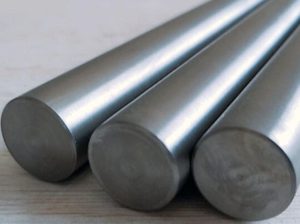
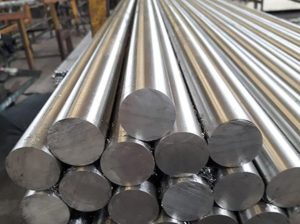
Steel billets are heated and perforated to form the tubular section, which is then used to construct seamless pipes. The lack of seam welds is referred to as seamless.
Within the oil and gas sector, seamless steel pipes are applied in a variety of ways
- Operations upstream (OCTG pipes).
- Midstream (transmission and distribution of fluids, such as oil, gas, steam, acids, and slurries).
- Applications of general plumbing for utility services downstream (process pipework to refine oil and gas in derivative goods).
Some requirements, like ASTM A106, apply to both seamless and welded pipes, whereas others solely cover Carbon Steel Seamless Pipes (for example ASTM A53).
The majority of high- and low-temperature applications can be utilized for carbon steel pipes (A53, A333, A106, and API 5L), while corrosive services are the primary usage for stainless steel pipes, which have a smaller market share and higher grades are used as the temperature and the pressure increase, or when the conveyed fluid is more and more aggressive.
The primary specification for OCTG pipes in the upstream oil and gas sector is API 5CT (oil country tubular goods).
To avoid confusion, seamless tubes and steel pipes must be distinguished. Tubing and pipes do differ in a few significant ways that go beyond simple lexical distinctions. In general, a Carbon Steel Seamless Pipes or tube is a tube or tube section used in transporting fluids, while a tube or section used in the construction of pressure equipment such as boilers and heat exchangers is a tube or section of various shapes and sizes.
ERW pipes
Steel coils are used to make ERW pipes; the coil is first uncoiled, followed by smoothing, cutting, and ultimately, electrically attaching its two ends to form a pipe.
Due to the advanced welding techniques used by ERW pipe producers, ERW pipes have recently emerged as a cost- and performance-effective alternative to seamless pipes (example HFI and HFW, high-frequency welding). As a result of these developments in welding technology, seamless and ERW pipes are now interchangeable, at least in some low- to medium-pressure and temperature applications, which has decreased the technical superiority of ERW pipes over seamless pipes over time. Naturally, seamless pipes will always benefit from the steel billets’ inherent better mechanical strength over coils and plates.
ERW PIPE MANUFACTURING PROCESS
Steel coils are first uncoiled, cut, processed, welded, and tested. For oil and gas pipes, the “high-frequency induction technology” (ERW-HFI), with its induction current applied to the outside surface of the pipe, is the most frequently used welding method.