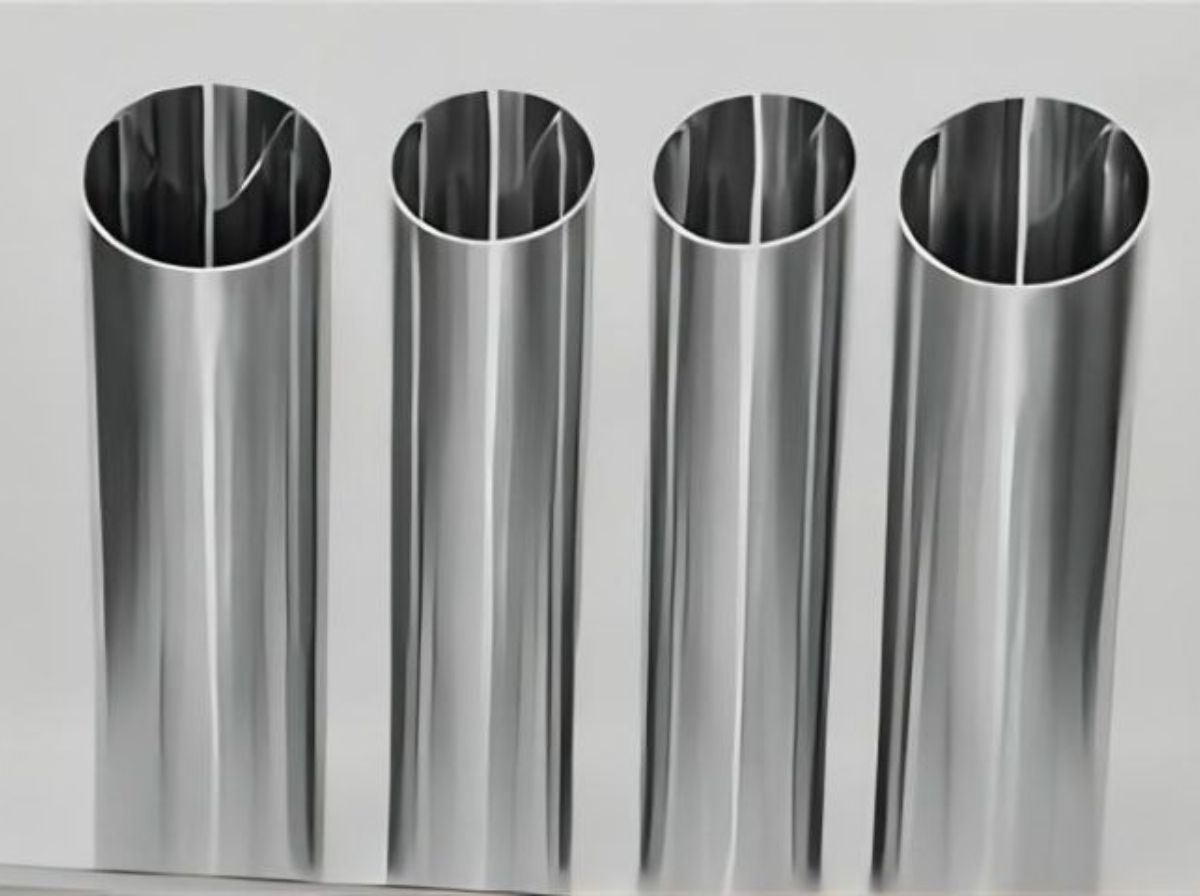
Oil, gas, and petrochemical plants push piping materials to their limits. Furnace tubes glow at 1000°C, and process lines carry sour gas that damages ordinary steel in months. Standard carbon steel cannot survive this, which is why engineers turn to industrial stainless steel 310 pipes for sections where failure is not an option. This blog covers the properties, benefits, applications, and selection factors for Stainless Steel 310 Pipes.
What are 310 Stainless Steel Pipes?
Grade 310 is an austenitic stainless steel built around 24-26% chromium and 19-22% nickel, a composition that keeps the microstructure stable after prolonged heat exposure and sets it apart from lower grades like 304 or 316.
Manufacturers produce two forms. Seamless pipes go through hot extrusion or piercing, leaving no weld seam and giving uniform strength around the circumference, while welded pipes, formed from rolled plate, cost less and suit lower-pressure applications. Sizes range from ½ inch to 24 inches in outer diameter, with schedules from 5S through 160. ASTM A312 covers the seamless and welded austenitic pipe used in high-temperature service, with TP310 falling under this specification.
Key Properties of 310 Stainless Steel Pipes
310 Stainless Steel Pipes hold their strength at temperatures up to 1150°C in continuous service, a threshold few other stainless grades reach. The chromium oxide layer on the surface regenerates continuously, protecting the base metal from scaling, while resistance to sulfidation and carburization covers the corrosive side of petrochemical process streams.
Tensile strength sits at a minimum of 75,000 PSI, and service life stretches past 20 years in many refinery installations.
Benefits in Oil, Gas, and Petrochemical Industries
SS 310 Pipes deliver consistent performance in furnace tubes and heat exchangers where temperatures swing between 800°C and 1100°C, without losing structural integrity during a process upset. SS 310 Seamless Pipes resist hydrogen sulfide, sulfur compounds, and oxidizing acids in refinery process streams, cutting down the pitting and stress corrosion cracking that plague less resistant alloys.
Fewer failures mean fewer shutdowns. Refineries that swap carbon steel furnace tubes for 310 stainless often extend turnaround intervals from 2 years to 5 years or longer, and Schedule 40 wall thicknesses maintain rated pressure capacity as temperature climbs, which improves plant safety and often doubles equipment lifespan compared to standard 304 stainless.
Upfront material cost runs higher than carbon steel, but the lifecycle math favors 310 stainless once maintenance labor and replacement frequency enter the calculation.
Applications in Oil, Gas, and Petrochemical Industries
ASTM A312 TP310 Pipes are used in refineries in the crude distillation units, catalytic reformers and the hydroprocessing section, and petrochemical plants in the ethylene crackers and the steam reforming units where the furnace tube temperature is often above 1000°C.
The alloy is used in heat exchangers due to its thermal stability, especially in shell and tube configuration, and in furnace and boiler systems for radiant tubes and superheater sections where heat is transferred directly from the flames.
Offshore and onshore gas processing facilities specify SS 310 for sour service lines, where hydrogen sulfide exposure rules out carbon and low-alloy steels, and chemical storage tanks handling sulfur-bearing compounds round out the list.
Factors to Consider When Choosing 310 Stainless Steel Pipes
Operating temperature sets the baseline requirement, since a process running at 600°C has different metallurgical demands than one running at 1100°C, and pressure rating follows directly. Usually, it is a question of whether the normal TP310 or the low-carbon TP310S is more appropriate, especially for welded parts susceptible to sensitization. The pipe needs to be ASTM compliant and the mill test reports verify this. Supplier reliability is as important as the specification itself, as it will have the same impact on project schedules.
Conclusion
310 Stainless Steel Pipes combine heat resistance up to 1150°C, resistance to oxidation and sulfidation, and creep strength that holds up over decades of service, making them a fit for the toughest sections of oil, gas, and petrochemical plants. Choosing certified SS 310 Seamless Pipes backed by proper mill documentation gives engineers a material that reduces maintenance frequency, lowers the risk of unplanned shutdowns, and holds its mechanical properties long after standard grades would have failed. Leoscor Alloys manufactures and supplies premium-quality 310 stainless steel pipes engineered for refineries, petrochemical plants, and oil and gas facilities that need dependable performance under extreme operating conditions.