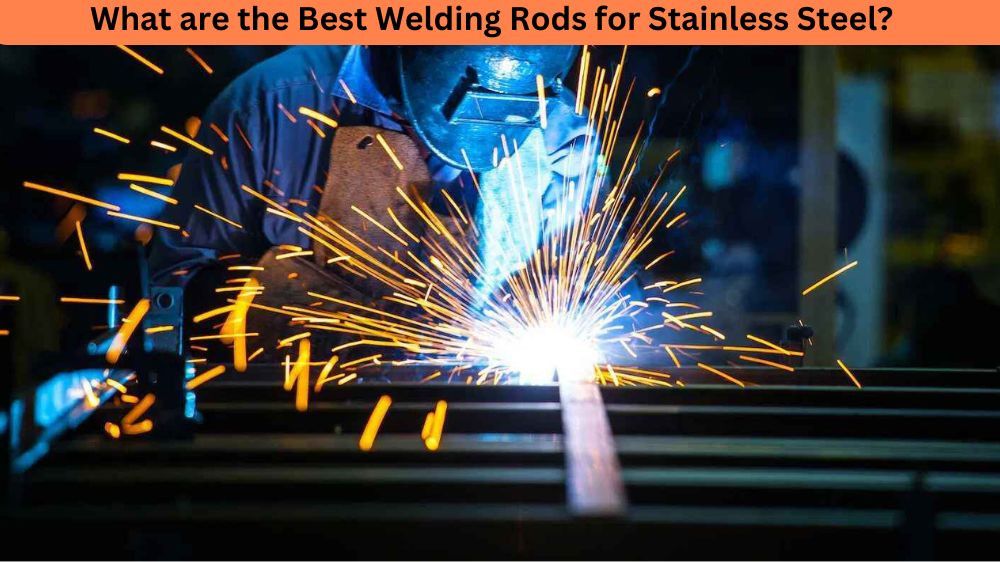
Selecting an incorrect filler rod for stainless steel causes joint failure long before the weld itself fails. Mismatched alloys allow chlorides and acids to attack the base metal, corroding the joint within months. Three primary factors dictate correct selection: base metal grade, service environment, and welding process. Errors in any of these three areas compromise either mechanical strength or corrosion resistance first.
Why Rod Selection Matters
Chromium and nickel content in the filler must track closely to the base metal’s own composition. A rod under-alloyed in chromium leaves the weld pool short on the element that forms the passive oxide layer stainless steel depends on, and that joint corrodes first under stress. Position matters too. Overhead and vertical welds need a rod formulated for out-of-position work, not just the right alloy family. Operating conditions determine filler performance over time. A marine deck exposes joints to harsh saltwater spray, whereas a food processing line subjects welds to aggressive sanitising acids. Selecting a filler alloy matched precisely to these specific chemical exposures prevents premature corrosion and extends service life from months to years.
Best Welding Rods for Stainless Steel
The stainless steel welding rods below cover most repair and fabrication work, each suited to a narrow band of base metals.
ER308L Welding Rod
ER308L handles 301, 302, 304, and 308 grades with a low-carbon composition that resists sensitisation at weld temperatures, making it the standard choice for general fabrication. This rod falls short of 316-grade parent metal because the alloy lacks molybdenum, leaving the weld joint susceptible to chloride pitting attack.
ER316L Welding Rod
ER316L pairs with 316 and 316L stainless, carrying roughly 2 to 3 % molybdenum that lifts resistance to chlorides and acids beyond 308L. Welding stainless steel rods in this class costs more, but naval and chemical-plant welders pay for corrosion protection that general fillers can’t match.
309L Welding Rod
309L bridges stainless to carbon steel, carrying higher chromium and nickel than 308L to offset dilution from the plain-carbon side of the joint. Fabricators reach for it on transition welds, cladding, and buffer layers.
E308-16 Stick Rod
Stick welders running 304 and other 300-series grades reach for E308-16, whose rutile coating keeps arc starts clean across every position. Field crews favour it over TIG for tank and pipe repairs where portability matters more than finish, though it stops short of 316 service.
E316-16 Stick Rod
E316-16 is the stick equivalent of ER316L, built for 316 and 316L joints exposed to saltwater or acidic process fluid. Vertical-up passes run slower than with 308-series coatings, a trade-off most welders accept given the chloride resistance it delivers on marine and chemical-plant repairs.
Stainless Steel 316 Rod Welding Application
316 stainless steel shows up across chemical processing tanks, marine hardware, and food equipment because its molybdenum content resists pitting that 304 can’t survive in salt or acid exposure. Welding stainless steel rods for this grade means choosing ER316L or E316-16. Other grades affect the molybdenum content, which sets it apart.
Why 316 Needs Special Attention
Molybdenum is what separates 316 from 304, present at 2 to 3 % by weight and responsible for the alloy’s resistance to chloride pitting and crevice corrosion. A filler rod without matching molybdenum content creates a weak point at every joint, no matter how sound the weld looks. Checking the correct SS welding rod number before striking an arc keeps that resistance intact from base metal through to filler.
Welding Tips for Stainless Steel
- Keep heat input low to limit warping and narrow the heat-affected zone.
- Shield the weld pool with argon or an argon-helium blend to prevent atmospheric contamination.
- Grind away oxide scale and degrease the joint before striking an arc. Surface prep prevents porosity that no filler rod can fix afterwards.
Conclusion
Welding 316 stainless steel requires ER316L or E316-16 filler metals, as these options provide the molybdenum content necessary to protect that grade against corrosion. General fabrication on 304 and similar grades runs well on ER308L or E308-16, with 309L reserved for stainless-to-carbon steel transitions. Verifying rod classification against the parent metal prior to welding ensures that the selected filler maintains structural and corrosion performance remains intact throughout the service life of the component.