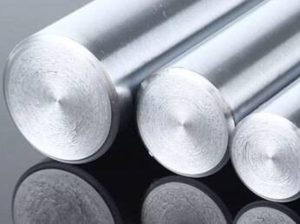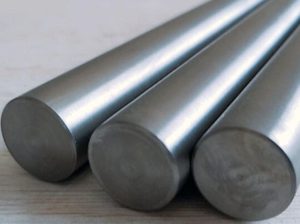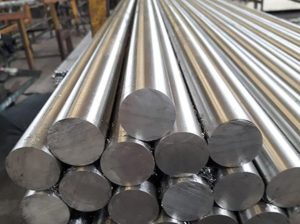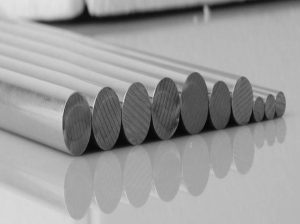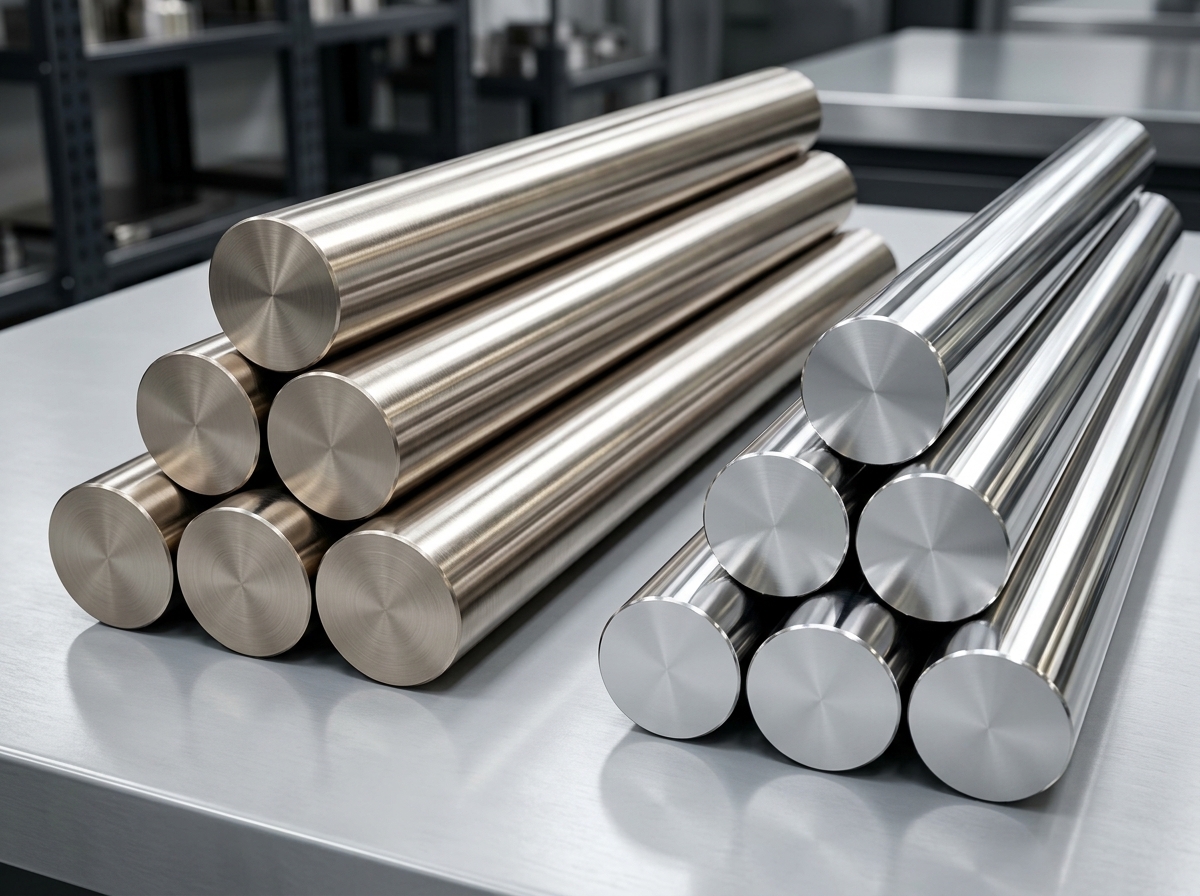
Picking the wrong stainless steel grade costs more than money. It costs downtime, premature component failure, and in some cases, full system replacement years ahead of schedule. Engineers across oil and gas, aerospace, food processing, and marine industries face this decision regularly: 17-4 PH or 316? Both are stainless. Both resist corrosion. But their mechanical behavior, heat treatment response, and environmental suitability differ enough that using one where the other belongs creates real problems. Whether specifying high strength stainless steel bars for load-bearing shafts or corrosion resistant stainless steel bars for chemical exposure service, the grade decision deserves more than a data sheet glance. For procurement teams and design engineers sourcing stainless steel round bars, understanding where each material performs and where it falls short separates a sound specification from a costly one.
Why Material Selection Matters in Stainless Steel Applications
Operating conditions determine grade suitability far more reliably than default habits. A bar performing well in a marine heat exchanger may fail within months handling high-cycle mechanical loads in a turbine shaft application. Three factors drive most grade selection decisions: mechanical load requirements, corrosion exposure type and intensity, and the balance between upfront material cost and long-term service life.
Impact of Mechanical Performance Requirements
Strength requirements narrow the candidate list quickly. Applications involving tensile loads above 100 ksi, fatigue cycling, or impact loading rule out grades that cannot achieve those thresholds. 17-4 PH stainless steel, covered under ASTM A564, reaches tensile strengths between 150 ksi and 200 ksi depending on the H-condition heat treatment applied. Standard austenitic grades like 316 do not respond to precipitation hardening, plateauing around 75 to 80 ksi in the annealed condition. For shafts, fasteners, and structural load-bearing bars, that gap matters.
Environmental and Corrosion Considerations
Not all corrosion is equal. Chloride-induced pitting, crevice corrosion in stagnant media, and general oxidation each respond differently to alloy chemistry. Grade 316 carries molybdenum at roughly 2 to 3%, lifting pitting resistance and handling chloride environments found in food processing and coastal installations. In strongly acidic chemical service or continuous seawater immersion, 316 holds up better than most precipitation hardening grades. However, 17-4 PH delivers adequate corrosion resistance for atmospheric exposure and mildly corrosive industrial fluids where its strength advantage is the primary need.
Cost vs Long-Term Performance
Choosing a bar grade based on purchase price alone rarely works out. A less expensive 316 bar selected for a high-stress application may require more frequent replacement or a heavier cross-section to compensate for lower yield strength, adding machining time and weight. Conversely, specifying 17-4 PH for a mild aqueous environment adds cost without adding benefit. The right approach accounts for replacement frequency, machining costs, and system downtime across the full service life.
17-4 PH vs 316 Stainless Steel Bars: Major Differences
Strength and Hardness Comparison
Precipitation hardening provides a structural advantage that austenitic grades cannot achieve through cold working. Bars of UNS S17400 stainless steel are heat-treated to Condition H900 to have a minimum yield strength of 170 ksi and a hardness of approximately 40 Rockwell C. At H1150 condition, yield is reduced to about 115 ksi, but ductility is increased. Annealed bars of grade 316 have about 30 ksi yield strength and hardness in the Rockwell B 80 to 95 range. That difference directly affects the cross-sectional area needed to handle dynamic or static loads safely.
Corrosion Resistance Performance
316 stainless steel bars outperform 17-4 PH in aggressive aqueous, chloride-heavy environments. Molybdenum in 316 increases the pitting resistance equivalent number (PREN) to about 25 to 27, compared to about 14 to 16 for 17-4 PH. 316 is more resistant to seawater, acidic chemical streams and brine service. For atmospheric exposure and mildly corrosive process fluids, 17-4 PH delivers corrosion resistance that satisfies most SS 316 round bar application standards without additional alloy content.
Machining and Fabrication Differences
Both grades machine reasonably well by stainless steel standards, but their behavior differs. Grade 316 in the annealed condition cuts smoothly and work-hardens at a moderate rate. 17-4 PH bars machined before aging respond better than post-aged material, which reaches hardness levels that accelerate tool wear. Standard practice for precision components involves rough machining before heat treatment, then finish grinding after aging. Welding 17-4 PH requires careful filler selection and post-weld aging to restore mechanical properties. Grade 316 welds readily with standard austenitic filler wire and needs no post-weld heat treatment in most applications.
Heat Treatment and Material Behavior
The heat treatment path separates these two grades fundamentally. Grade 316 does not respond to precipitation hardening, and its properties stay stable across a wide temperature range, making it straightforward to specify. 17-4 PH bars undergo solution annealing followed by age hardening at temperatures between 482°C (H900) and 621°C (H1150), with each condition producing a different balance of strength and toughness. Engineers can specify the exact H-condition to hit a target strength level. The trade-off is added processing, precise temperature control, and slight dimensional change affecting final tolerances.
Which Applications Are Better Suited for Each Material?
Applications Commonly Using 17-4 PH Stainless Steel Bars
Aerospace components account for a large share of ASTM A564 17-4 PH bar consumption. Structural brackets, actuator shafts, landing gear components, and fasteners in airframe assemblies rely on the high strength-to-weight ratio that precipitation hardening provides. Pump shafts in high-pressure hydraulic systems, valve stems in oil and gas wellhead equipment, and rotating components in turbomachinery draw on the same mechanical advantages. Any application carrying substantial load without adding cross-sectional bulk points toward this grade.
Applications Commonly Using 316 Stainless Steel Bars
Marine hardware, seawater desalination components, and offshore platform fittings depend on 316 for chloride resistance. Food and beverage processing equipment uses 316 because it resists organic acids and aggressive cleaning chemicals cycled through regularly. Chemical plant piping systems handling dilute sulfuric acid, phosphoric acid, and halide compounds specify 316 as a baseline. Medical device frames and pharmaceutical process components rely on its low corrosion product release. Wherever prolonged contact with aggressive aqueous media defines the primary constraint, 316 stainless steel bars hold up.
Factors Engineers Consider Before Choosing Between 17-4 PH and 316
Four factors tend to resolve most grade selection decisions between these two materials.
Load-Bearing Requirements determine whether precipitation hardening grades justify the additional cost and processing complexity. If the bar must sustain tensile or fatigue loads above what 316 handles at practical diameters, 17-4 PH becomes the functional requirement rather than a preference.
Corrosion Exposure Conditions set the lower bound on what any grade must tolerate. Chloride concentration, pH, temperature, and whether exposure is continuous or intermittent all affect which grade survives the service period. 316’s molybdenum content gives it a measurable edge in most aqueous corrosion scenarios.
Service Life Expectations feed into the cost calculation directly. A component running for 20 years in a demanding environment justifies higher material and processing costs if it avoids two or three replacement cycles.
Manufacturing and Machining Requirements affect total cost beyond material price. Extensive welding favours 316 for reduced post-weld complexity. Tight tolerances after heat treatment add cost and risk that may steer selection toward a grade with simpler processing requirements.
About the Supplier
Leoscor Alloys supplies stainless steel bars, round bars, and specialty alloy products to industries spanning oil and gas, petrochemical, aerospace, marine, and food processing. The company stocks and exports grades such as 17-4 PH stainless steel bars to ASTM A564 and 316 stainless steel bars in a range of sizes and conditions. Leoscor Alloys is a supplier of 17-4 PH stainless steel and 316 stainless steel bars with export reach, offering procurement teams and engineering firms dependable material sourcing with traceable documentation. Provides capabilities to the construction, automotive, appliance, and chemical industries.
Conclusion
The choice between 17-4 PH and 316 stainless steel bars comes down to what the application demands. High mechanical loads, fatigue cycling, and tight weight constraints point toward 17-4 PH. Aggressive corrosion exposure, continuous aqueous media contact, and weld-heavy fabrication point toward 316. Neither grade is a universal answer. Specifying based on familiarity rather than operating conditions wastes either strength capability or corrosion resistance. Engineers get better outcomes by defining the load case, corrosion environment, and service life first, then matching the grade to those requirements rather than the other way around.