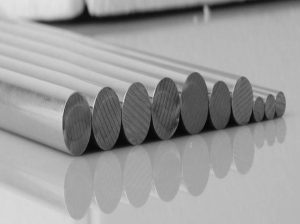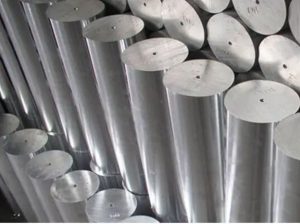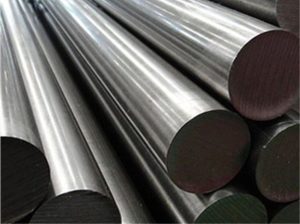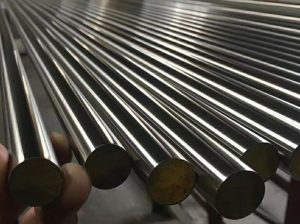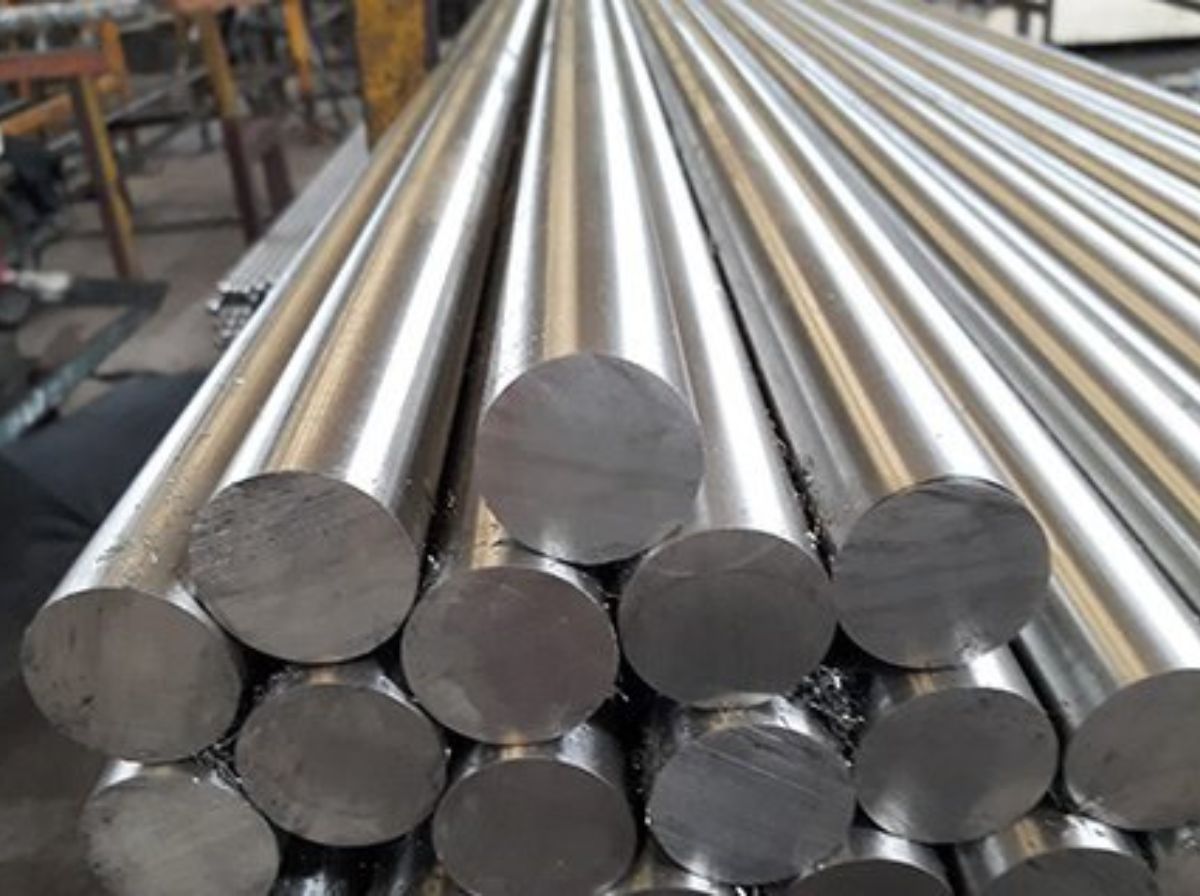
Stainless steel 321 round bars prevent high-temperature sensitisation failure, extending the service life of austenitic alloys. When unstabilised grades like 304 are held in the 425–870°C temperature range during welding, heat treatment, or sustained process operation, chromium carbides precipitate at grain boundaries, depleting the local chromium content and creating corrosion-susceptible zones. SS 321 round bars address this directly through titanium stabilisation, which ties up carbon before chromium carbides can form, extending the alloy’s reliable service range into temperatures where unstabilised grades would corrode and fail.
What Is Stainless Steel 321 Round Bar?
Stainless Steel 321 Round Bar is manufactured from UNS S32100 alloy, the European equivalent designation is WNR 1.4541, a titanium-stabilised austenitic stainless steel. Titanium is added at a minimum ratio of five times the carbon content, ensuring it combines preferentially with carbon rather than allowing chromium carbide precipitation at grain boundaries during thermal cycling. The bar is supplied to ASTM A276 for general bar and shape applications, and ASME SA276 for pressure-vessel and boiler components under the ASME code. Both specifications govern composition, mechanical properties, and testing requirements for the delivered material.
Key Properties of SS 321 Bars
- Corrosion resistance comparable to 304 in most atmospheric, aqueous, and mild chemical environments. At high temperatures, titanium stabilization keeps chromium in solid solution, maintaining the passive layer that protects against corrosion following thermal cycling. SS 321 Bars are used where 304’s corrosion resistance is needed, but welding or high-temperature exposure is expected.
- Oxidation resistance holds adequately up to approximately 870°C in continuous service and 925°C in intermittent service, sufficient for exhaust system components, furnace parts, and process equipment in the upper range of austenitic stainless capability.
- High-temperature mechanical performance retains adequate strength across the sensitisation temperature range where unstabilised grades lose both mechanical integrity and corrosion resistance simultaneously.
- Weldability is good. The titanium stabilisation that prevents sensitisation in service performs the same function in the welded heat-affected zone, eliminating the need for post-weld annealing in most fabricated assemblies.
- Formability and machinability match 304 closely, making SS 321 a practical substitution in fabrication environments already tooled and procedurally qualified for standard austenitic stainless processing.
Benefits of ASTM A276 321 SS Bars
Resistance to sensitisation during welding and elevated-temperature service is the primary benefit over unstabilised 304 and 316. For welded assemblies that cannot be solution-annealed after fabrication which describes most large or field-welded structures 321’s titanium addition maintains corrosion resistance at weld heat-affected zones throughout the component’s service life.
Suitability for thermally cycled applications where the material repeatedly enters and exits the sensitisation temperature range during normal operation makes ASTM A276 321 SS Bars preferable to 304 in exhaust systems, heat exchanger headers, and furnace components that cycle between operating and ambient temperature regularly.
Fabrication advantages from the 304-family alloy base mean existing fixtures, welding procedures, and tooling for 304 transfer to 321 fabrication without significant requalification, reducing the practical cost difference between the two grades.
Long-term material reliability in service environments that would sensitise and corrode 304 within a reasonable service period justifies 321’s selection for components with design lives measured in years rather than months.
Applications of Stainless Steel 321 Round Bar
Stainless Steel 321 round bars are used in demanding industrial and technical applications and offer outstanding high temperature strength and oxidation resistance.
- Aerospace Components: Exhaust systems, engine supports, and structural components that are exposed to high temperatures and intense thermal cycling.
- Chemical Processing: Agitator shafts, reactor internals and heat exchangers for high-temperature corrosive fluids.
- Furnace & Heat Treatment: Basket, support rails and fittings function consistently in the heat environment of 500°C to 870°C.
- Exhaust Systems: Automotive, industrial and marine pipes resistant to intergranular weld corrosion caused by cyclic heating and cooling.
- Petrochemical Facilities: Cracking unit parts, reformer supports, and high-temperature pipes for continuous service at elevated temperatures.
ASME SA276 SS 321 Bars: Standards & Selection
ASTM A276 and ASME SA276 are the primary governing specifications for SS 321 bars in general and pressure-equipment applications, respectively. Before ordering, confirm that the certificate designates UNS S32100 with titanium content verified against the specification minimum. Diameter tolerance, surface finish, and condition, hot-rolled, cold-drawn, or ground, must match the downstream fabrication process. For applications requiring specific mechanical properties or impact testing, confirm those requirements at the order stage rather than at goods receiving. EN 10204 3.1 mill test certificates covering heat chemistry, mechanical properties, and titanium content should accompany every consignment.
Conclusion
SS 321 round bars are selected when the application requires austenitic stainless steel corrosion resistance combined with reliable performance through thermal cycling, welding, and sustained elevated-temperature service where unstabilized grades would sensitise and fail. Titanium stabilization is the property that makes the grade specifically valuable for these conditions, and verifying its presence through proper material certification is as important as specifying the correct alloy designation.