Aerospace fasteners go through tough conditions that destroy ordinary metals within a few flight cycles. Engine bolts see temperatures above 600°C, constant vibration, and cyclic loads repeated thousands of times per flight. A fastener that loosens at altitude is a safety failure. This is why manufacturers choose aerospace grade alloy 660 bars for critical bolting, from turbine casings to structural airframe joints. The alloy holds its strength at temperature and survives fatigue cycles that fracture standard stainless steel. This blog will cover the properties, benefits, applications and selection factors for alloy 660 round bars in aerospace fastener manufacturing.
What Are Alloy 660 Round Bars?
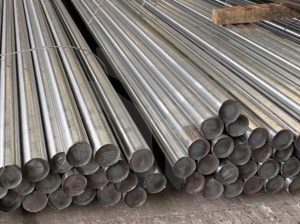
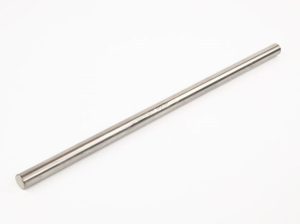
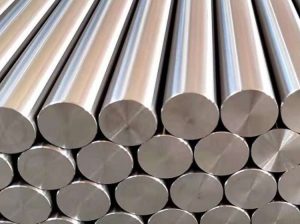
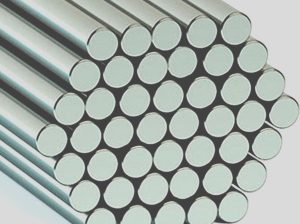
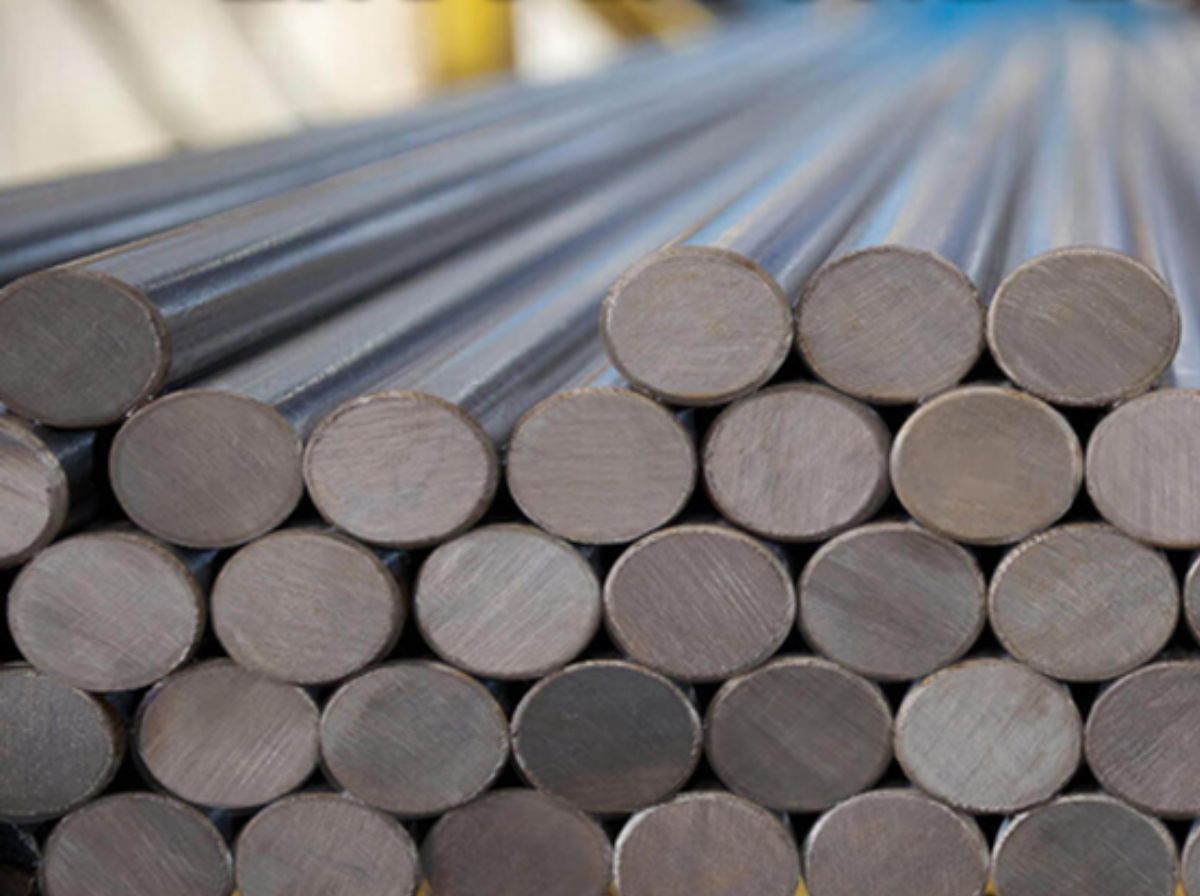
Alloy 660 round bars, also known as alloy A286 round bars, are precipitation-hardening iron-nickel-chromium bars built for high-temperature fastener service. Composition runs roughly 25% nickel, 15% chromium, 1.3% molybdenum, and 2.15% titanium, balanced with iron. Titanium and aluminum trigger the gamma-prime hardening that gives strength above 600°C. Diameters range from 6mm to 200mm in hot-rolled, cold-drawn, and forged finishes, produced to ASTM A638, ASME SA638, and UNS S66286 specifications.
Key Properties of Alloy 660 Round Bars
- Excellent high-temperature strength: Alloy 660 bars retain tensile strength above 900 MPa up to 700°C.
- Superior oxidation resistance: Chromium content forms a stable oxide layer resisting scale in continuous heat.
- Outstanding corrosion resistance: The alloy withstands jet fuel, hydraulic fluid, and marine exposure without pitting.
- High tensile and creep strength: Bars deliver 550 MPa minimum yield with low creep under thermal load.
- Good fatigue resistance: The microstructure resists crack initiation through takeoff and landing cycles.
- Excellent machinability and weldability: Bars machine to fastener tolerances and accept fusion welding reliably.
- Long service life: Fasteners routinely exceed 10,000 flight-hour intervals before replacement.
Why Alloy 660 Round Bars Are Ideal for Aerospace Fasteners
Weight is an important element in all aerospace components and A286 round bars deliver the strength without the weight penalty of heavier superalloys. A bolt machined from this material carries the same load as a bulkier steel fastener at a fraction of the weight, which adds up across thousands of fasteners per airframe. Engine mounts operate past the point where carbon steel loses grip strength, yet alloy A286 round bars hold torque retention at 650°C.
Every takeoff and landing loads a fastener again, and over a 20-year airframe life that adds up to millions of stress reversals the fine-grained structure resists without cracking. Corrosion adds risk in coastal and humid climates, where standard alloys pit within a few years. This grade resists salt spray and hydraulic fluid without coating, and every batch ships against ASTM A638 and AMS 5731 standards.
Applications of Alloy 660 Round Bars
- Aerospace bolts and nuts: Structural and engine-mount fasteners rated for sustained torque at temperature.
- Aircraft engine fasteners: Compressor case bolts and combustor hardware exposed to exhaust heat.
- Turbine components: Blade root fasteners and casing bolts under rotational stress.
- Jet engine hardware: UNS S66286 round bars machine into studs, washers, and locking collars.
- Structural aerospace fasteners: Wing spar and fuselage joint bolts carrying flight loads.
- High-temperature industrial fasteners: Furnace and exhaust system bolting in process plants.
- Power generation components: Gas turbine bolting exposed to 500°C-plus cycles.
- Automotive racing components: Turbocharger studs and exhaust manifold fasteners.
Factors to Consider When Choosing Alloy 660 Round Bars
Match the material grade to the specific specification on the drawing, since AMS and ASTM versions have different heat treatment requirements. Continuous service above 700C will take this alloy towards its limit so check the operating temperature. Calculate cyclic stress range and preload torque to finalize bar diameter. Check tolerance for diameter with machining allowance. If it is undersized, it is a stock and must be reworked. Verify mill test certificates against ASTM and ASME. Demand test reports before acceptance of flight critical hardware.
Conclusion
Alloy 660 Round Bars combine tensile strength, heat resistance, fatigue tolerance, and corrosion resistance in one material system built for aerospace fastener duty. These properties mean fewer inspection flags, longer service intervals, and fasteners that hold torque through thousands of flight cycles. Selecting certified A286 round bars from a supplier who can provide mill certificates ensures your safety margins and your program schedules. Leoscor Alloys Alloy 660 Round Bars are compliant with ASTM A638 and ASME SA638 standards, and offer full traceability for the aerospace fastener program.